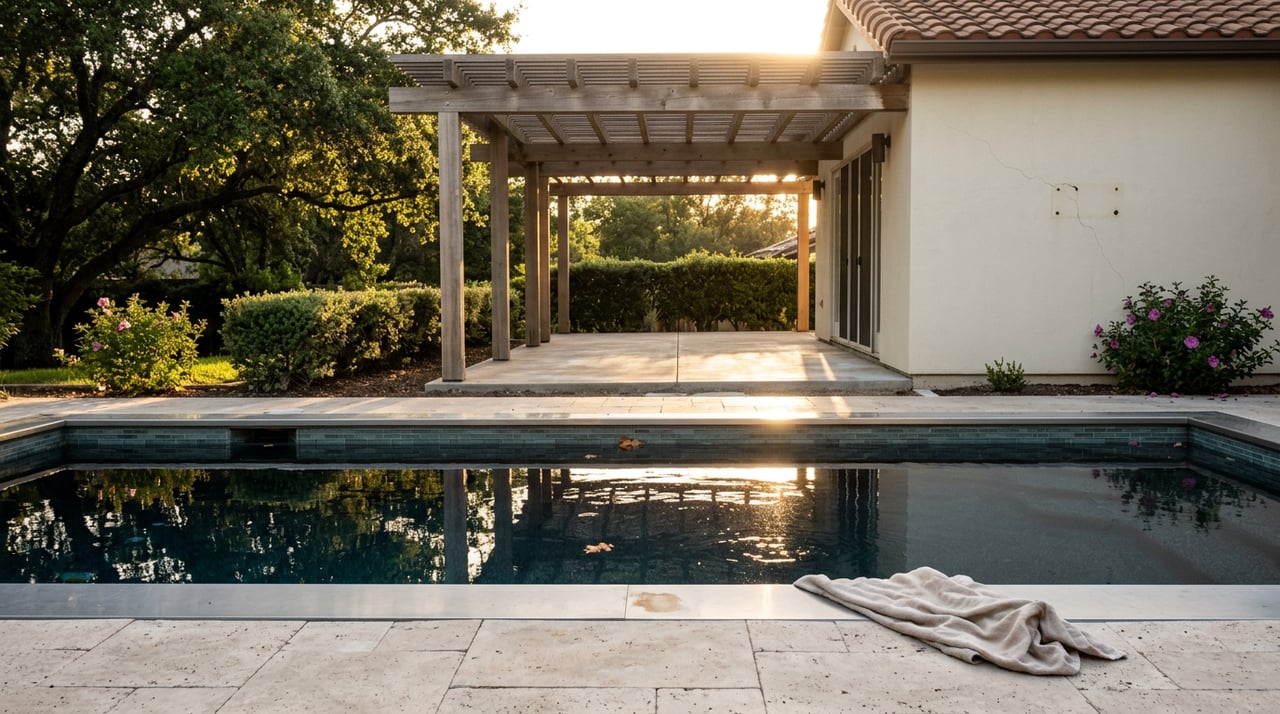
The Two Restaurant Booms Happening in San Ramon Right Now
Two restaurant stories broke in San Ramon within a few months of each other. In December, a 24-hour Mexican drive-thru chain took over the Wendy's spot on San Ramon Valley Boulevard that had sat empty since the previous fall. In late April, a Turkish restaurant with a built-in live jazz program opened its largest footprint yet inside City Center Bishop Ranch, betting on a city its founders had never operated in before. Same municipality, roughly the same stretch of the calendar, completely different logic.
That contrast is the actual story. San Ramon isn't having one restaurant boom. It's having two, and they're happening at two different addresses for two different reasons.
El Forastero opened December 15 at 2222 San Ramon Valley Boulevard, in the drive-thru building that had housed a Wendy's for nearly a decade before it closed last fall. The chain runs its restaurants 24 hours a day, seven days a week, and this location marks its first expansion into the Bay Area after building out roughly 20 locations concentrated in greater Sacramento and the San Joaquin Valley. Around the same time, a longtime San Ramon steakhouse announced it would close on Christmas Eve after it couldn't secure or renew its lease.
Neither of those is a bad-news story on its own. Commercial turnover on a suburban boulevard is normal, and a 24/7 drive-thru filling a box built for exactly that use is a landlord solving a vacancy, not a signal about where the city is headed. What it tells a resident is simpler: San Ramon Valley Boulevard still runs on convenience economics. A national chain leaves, another national chain takes the same footprint, and the street keeps functioning the way it always has.
City Center is telling a different story entirely.
The restaurants that have leased space at City Center Bishop Ranch over the past year aren't replacing what was there with something equivalent. They're each making the largest commitment of their company's history in a market none of them had tested before.
| Restaurant | What it is | The tell |
|---|---|---|
| Meyhouse | Modern Turkish, meze plates, mesquite-fired seafood and meat | About 5,200 square feet, its third location overall and its first outside Palo Alto and Sunnyvale, with live jazz programming built into the concept from opening day |
| KHAKI Indian Bar and Canteen | Regional Indian cooking from Bihar, Kerala, Lucknow, Hyderabad, and Delhi | Led by chefs Sujan and Pujan Sarkar, both Michelin-recognized, with dishes like Champaran mutton that aren't served anywhere else in the Bay Area |
| Rico Rico Taco | Oakland taqueria known for handmade tortillas and spit-roasted al pastor | San Ramon is the only suburban market the operator has chosen to expand into |
| Super Duper Burgers | Fast-casual burgers, fries, and shakes | The chain's first Tri-Valley location, opened at the Shops at Bishop Ranch just across from City Center |
Meyhouse's arrival is the clearest signal of the four. The company built its reputation on two South Bay locations in Palo Alto and Sunnyvale before San Ramon became its third restaurant and its first stop in the East Bay. Co-owners Omer Artun and Koray Altinsoy are known for pairing the concept with live jazz, and they brought that programming to Alexander Square from opening night rather than treating it as an add-on. A restaurant operator committing that much of its identity to a single new suburb is making a specific claim about who lives there.
KHAKI backs up the same claim from a different angle. Chefs Sujan and Pujan Sarkar built their reputations on Michelin-level cooking, and the menu they brought to City Center includes dishes built around regional preparations, not the pan-Indian menu most Bay Area diners are used to. That's not a menu designed to be safe. It's a menu designed for a neighborhood the chefs believe can support it.
And Rico Rico Taco's decision might be the most telling of all. Restaurant operators built around a single flagship location with a devoted following are usually conservative about where they expand, because the format depends on regulars rather than foot traffic. Choosing San Ramon, and only San Ramon, out of every suburban market available says the operator sees something in this city that looks different from a typical suburb.
Jeff Dodd, senior vice president at Sunset Development, the company that owns and operates City Center, described the dynamic behind the moves directly: the more restaurants that arrive, the more energy builds, until it reaches a tipping point. The four openings above look like exactly that kind of compounding effect, not four unrelated deals.
The restaurant split shows up in San Ramon's live music calendar too, and the contrast is almost too clean.
City Center's Smooth Jazz series returned to Alexander Square this summer, with shows on July 11, 18, and 25, each starting at 7 p.m. Paul Taylor opened the series on sax on July 11. It's dinner-adjacent programming, built for people who are already at City Center for a meal and stay for the music, and it pairs naturally with Meyhouse's own jazz nights, which kicked off in May with Brazilian jazz-samba artist Larissa Viana and later brought in eleven-time Grammy winner Tony Lindsay.
A few miles away, San Ramon's Central Park Amphitheater runs its own free summer concert series on Sunday evenings, and it's built for a completely different night out. Residents bring blankets and low-back lawn chairs, food trucks and a beverage truck handle concessions, and the crowd skews toward families rather than date nights. This season included the Purple Ones' Prince tribute on July 26 and Take 2 on August 2, covering today's hits and yesterday's classics.
Same city, same season, two audiences that rarely overlap. One scene is curated around new restaurants trying to prove San Ramon can support a paid dinner-and-jazz night. The other is a free, city-run gathering that's existed for years and doesn't need City Center's momentum to work.
If there's a constant running through all of this, it's the San Ramon Farmers Market, which still sets up every Saturday from 9 a.m. to 1 p.m. at 6000 Bollinger Canyon Road, the same address as City Center itself. More than 70 vendors show up regularly, and the lineup has grown to include fresh seafood, specialty mushrooms, and microgreens alongside the produce stands. Growers like Smit Family Farms, known for certified organic apples grown on 100 acres of Linden farmland, and Alexandre Family Farm, a fifth-generation dairy operation, anchor a market that was drawing crowds long before Meyhouse or KHAKI signed a lease.
That market is the piece of San Ramon that isn't auditioning for anything. It doesn't need a Michelin-recognized chef or a tipping-point theory to justify itself. It's just been there, working, while the restaurants around it changed hands and reinvented what the plaza is for.
None of this is really about food. It's about how two different kinds of operators are reading the same city. A drive-thru chain sees a vacant box on a boulevard and fills it with a proven concept built for cars. A chef with a Michelin pedigree sees a plaza with a farmers market, a growing jazz calendar, and enough density to risk a menu built around dishes most of the Bay Area has never had. Both bets are rational. They're just rational about different versions of San Ramon.
If you live here, you already know which version you spend more time in. What's worth noticing is that both versions are getting more crowded at the same time, which is usually a sign a place is changing faster than its reputation has caught up to.
If you're watching San Ramon for reasons that go beyond dinner plans, whether that's a move within the Tri-Valley or a longer look at what this kind of momentum means for a neighborhood, Heather MacFarland has been tracking these shifts on the ground. Let's Connect.
Heather MacFarland is an experienced real estate agent with a passion for providing white-glove, concierge services to every client she represents.
Heather MacFarland | CA DRE# 02141113 | Elation Real Estate
127 Spring St Ste 230 Pleasanton, CA 94566