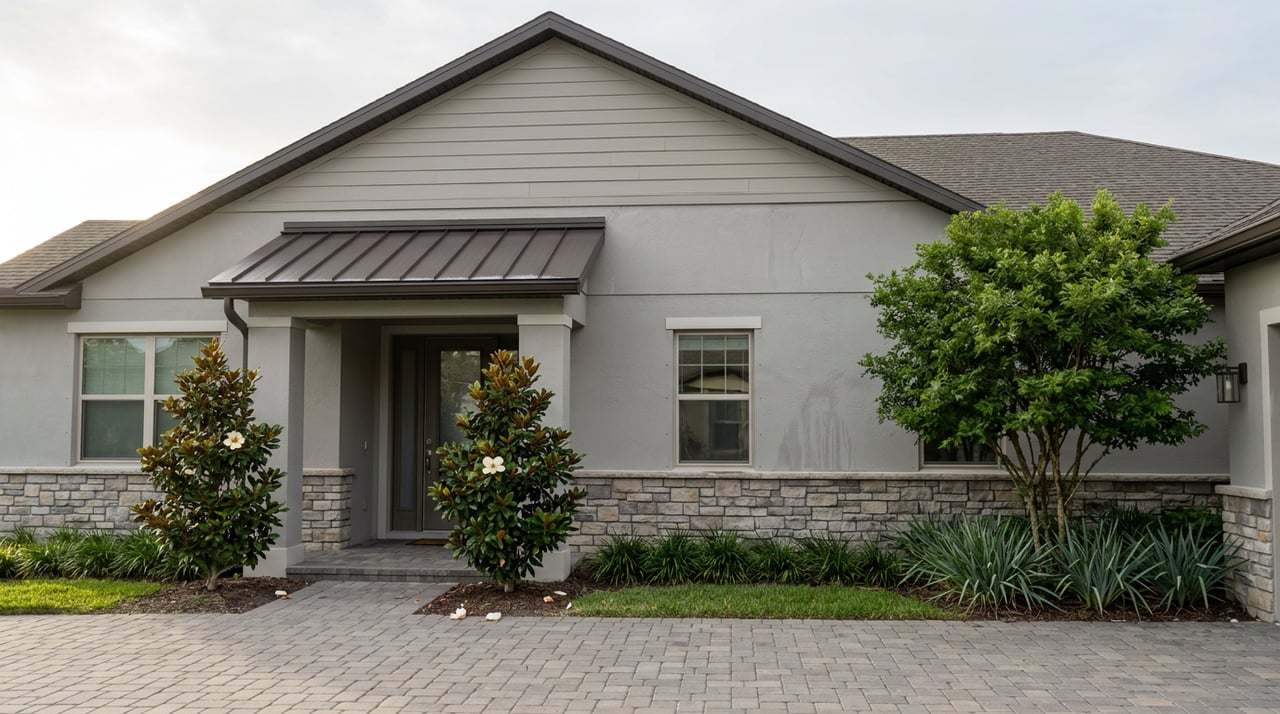
The Real Math Behind Dublin's East vs. West Price Gap
A buyer tours a new build in Jordan Ranch or Positano, falls for the great room and the three-car garage, and writes an offer at list. The inspection goes fine. The appraisal comes in. Contingencies get removed on schedule. Then the preliminary title report lands, and there it is: a special tax line that adds a few thousand dollars a year to a payment nobody budgeted for, because nobody mentioned it during the tour, the open house, or the first three conversations about the home.
That charge is Mello-Roos, and in Dublin it isn't a rare surprise. It's a structural feature of exactly the neighborhoods where the city's newest, most expensive homes sit. If you're comparing East Dublin to West Dublin right now and trying to understand why the price bands are so different, the square footage and the granite countertops are only part of the story. The rest of it is a recurring tax lien that quietly reshapes what "more expensive" actually means.
Mello-Roos is a special property tax authorized under California's Mello-Roos Community Facilities Act, billed separately from the standard 1 percent base property tax. It isn't calculated as a percentage of your home's value. Instead, each Community Facilities District sets its own formula, usually tied to square footage, lot size, bedroom count, or land use category, which means two neighbors on the same East Dublin street can pay meaningfully different amounts even though their homes appraise for roughly the same price. A 2026 lending industry guide to Mello-Roos puts typical annual charges in active Bay Area districts between $1,200 and $6,000, with some large, newer developments in high-growth corridors running past $10,000 a year.
None of that shows up in the list price. It doesn't always come up in the first few conversations with a listing agent, either. The charge exists as a lien on the parcel, and the place buyers actually encounter it is the preliminary title report, which sometimes doesn't land in a buyer's inbox until well into the contingency period. That timing is the whole problem: by the point a buyer sees the number, they may have already removed the contingencies that would have let them renegotiate or walk.
Dublin's citywide numbers hide more than they reveal, because Dublin isn't one housing market. It's two, split roughly along Tassajara Road, and they behave differently enough that pricing off the citywide median is a good way to misprice a home in either direction.
| East Dublin | West Dublin | |
|---|---|---|
| Typical vintage | Built 2005–2023 | Built 1970s–1990s |
| Representative areas | Positano, Jordan Ranch, Schaefer Ranch, Wallis Ranch, Fallon Village | Neighborhoods near San Ramon Road and the West Dublin/Pleasanton BART station |
| Typical price band in 2026 | $1.6M–$2.8M+ | $900K–$1.4M |
| Home size | Often 2,500–4,500 sq ft | Generally smaller, older floor plans |
| Mello-Roos exposure | Common, tied to the master-planned CFDs that financed these tracts | Uncommon, since most of the housing predates the CFDs |
The size and age differences explain a real chunk of that price gap on their own. But they don't explain all of it, and they don't explain why a buyer comparing a $2.2M East Dublin new build to a $1.3M West Dublin resale needs to do more math than subtracting one number from the other. If that East Dublin home carries $4,000 a year in Mello-Roos, that's roughly $333 a month added to the payment, counted by most underwriters right alongside the mortgage and base property tax in your qualifying ratios. The homes were never actually $900,000 apart in true monthly cost. They were closer, and the gap that remains is buying you a newer floor plan and a bigger lot, not a smaller number to write on the offer.
The special tax isn't arbitrary. It's how East Dublin's newest neighborhoods paid for the roads, parks, and utilities that make them livable in the first place, and the growth that justified those CFDs is still very much in motion.
The City of Dublin is currently midway through the design phase of the Dublin Boulevard Extension, a 1.5-mile extension from Fallon Road into Livermore that's been part of the city's General Plan since 1984. Final design is expected in fall 2026, with construction running an estimated 18 to 24 months once funding, right-of-way, and permits are secured. The engineering-level cost estimate sits at $153.6 million, and the city has identified about $76 million toward it so far, largely from impact fees tied to new development in the eastern part of the city.
That same growth corridor produced a legal fight worth knowing about if you're considering East Dublin. The Dublin Fallon 580 project, a 192-acre mixed-use development approved in 2024 that pairs 238 residential units with nearly 3.3 million square feet of future commercial and office space, drew a lawsuit from the Kingswood Owners Association over alleged violations of the California Environmental Quality Act. An Alameda County Superior Court judge found the city's underlying environmental analysis sound but ruled the council needed a project-specific finding on the tradeoffs. The council readopted that finding on January 13, 2026, and the project's approvals were not otherwise affected. The site will also dedicate land for the Dublin Boulevard Extension itself, tying the two stories together. If you're buying in this part of Dublin, that's the kind of build-out timeline worth understanding before you assume today's quiet street stays quiet.
Dublin's own market data, current as of this week, shows a split that mirrors the East-West divide almost exactly. Rising inventory is giving buyers real room to negotiate on West Dublin homes and properties that need updating, while pristine turnkey listings and newer East Dublin builds are still drawing fierce competition. Separately, weekly market tracking put Dublin's median list price at $1,647,577 as of August 3, 2026, with a market action index of 41, down from 46 the prior month, a sign the seller's market that defined East Dublin for years is cooling from its peak intensity without flipping to a buyer's market outright.
Put those two signals together and the negotiating strategy looks different depending on which side of Tassajara Road you're shopping. In West Dublin, a longer runway of inventory means there's room to negotiate the price itself, since there's usually no CFD drag to offset. In East Dublin, especially on new construction, the tax isn't something a builder is likely to negotiate away, so the leverage worth pushing for is a closing cost credit or rate buydown sized to offset what that special tax will cost over the years you expect to own the home.
Does Mello-Roos ever go away? Yes. Most bonds are structured to run 20 to 40 years from formation, and the special tax expires once the bonds are repaid. The remaining term varies by property depending on when the district was created.
Is any part of it tax-deductible? Sometimes, though it depends on what the specific CFD funds and requires documentation. For 2026, the federal SALT cap was raised to $40,000, which may open up more room for some California homeowners, but many will still hit the cap before a Mello-Roos deduction becomes meaningful. This isn't tax advice, and anyone weighing this should talk to a tax professional who can review the actual CFD documents.
Is West Dublin completely free of special taxes? Not universally. Mixed-use pockets closer to Dublin Boulevard and Dublin Centre can carry their own CFDs even outside the classic East Dublin tracts, so the safest approach is always to verify the specific parcel rather than assume based on the neighborhood name alone.
The number that actually determines whether a Dublin home fits your budget isn't the one on the listing. It's the one on the preliminary title report, converted into a monthly figure and compared honestly against the alternative. If you're weighing a new build in Jordan Ranch against a resale near West Dublin BART, or trying to figure out what a specific East Dublin address will really cost you over the next decade, Heather MacFarland can walk through the actual numbers with you before you're the one reading a surprise on day 15. Let's connect.



Heather MacFarland is an experienced real estate agent with a passion for providing white-glove, concierge services to every client she represents.
Heather MacFarland | CA DRE# 02141113 | Elation Real Estate
127 Spring St Ste 230 Pleasanton, CA 94566